Chanel Buttons: Understanding an Important Authentication Detail
A Guide to Chanel Buttons: an Important Authentication Detail
When authenticating a vintage Chanel bag, small hardware details often reveal the most. One commonly overlooked feature is the interior snap button. Over the decades, Chanel used several different button manufacturers and styles, making these components a useful indicator when assessing a bag’s production period and overall consistency.
However, buttons alone should never determine authenticity. They should always be examined alongside the serial sticker, hardware plating, stitching, leather quality, construction, and overall age of the piece.
Why Chanel Buttons Matter
The snap button used inside a Chanel bag is a production detail that changed over time. The markings, finish, and style of these buttons can help determine whether the hardware is period-correct for a bag’s serial series and estimated production year.
Because vintage Chanel bags were designed to last for decades, it is also common to encounter replaced buttons with repairs, cracked or worn snaps, oxidation from age, or mismatched hardware caused by restoration.
For this reason, a non-original button does not automatically mean a bag is counterfeit.
Main Chanel Button Types by Era
“SHB Schaeffer” Buttons
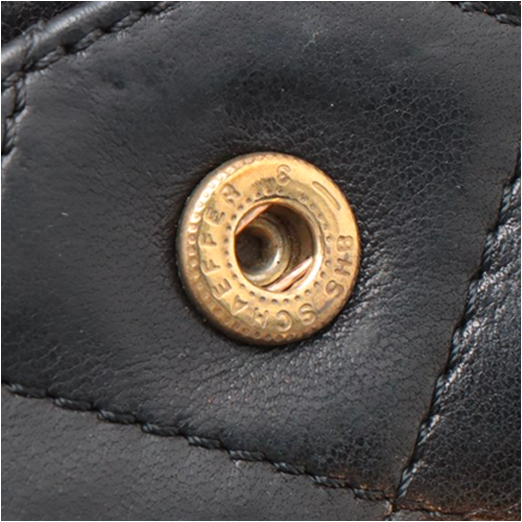
Usually found on bags produced before the 1990s. These buttons are commonly seen on older vintage Chanel pieces from the 1980s and earlier. They are generally stamped: “SHB” or “Schaeffer”
They are considered consistent with early vintage production and are often associated with classic 24k gold plated hardware era bags.
“FLOX” Buttons
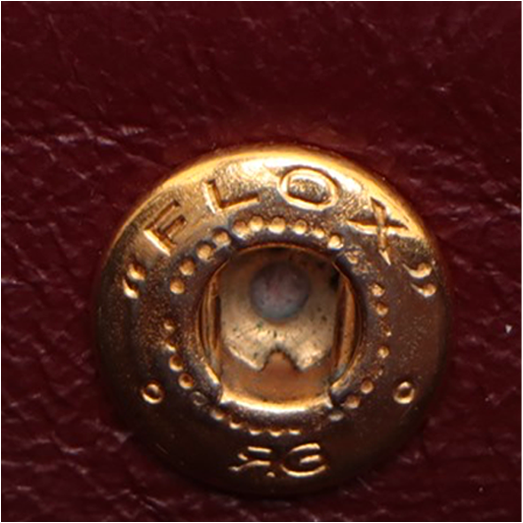
Typically seen on bags produced before 2002.
FLOX-stamped buttons became common during the 1990s and early 2000s. These snaps are frequently encountered on classic flap bags from the 1 to 5 series period.
A FLOX button on a bag claimed to be produced much later may require additional scrutiny.
Blank Buttons
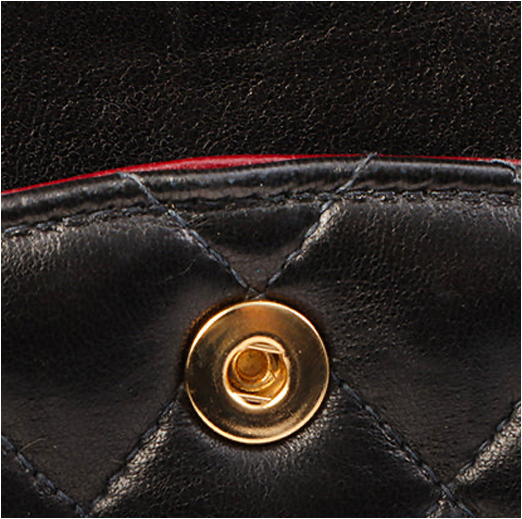
Commonly associated with 6 to 9 series bags (approximately 2000–2004).
During the early 2000s, Chanel used unmarked snap buttons on many bags. These plain buttons often surprise collectors because they appear simpler than earlier stamped versions.
Blank buttons from this era are completely normal and should not immediately raise concern when found on a period-correct bag.
“CHANEL PARIS” Buttons
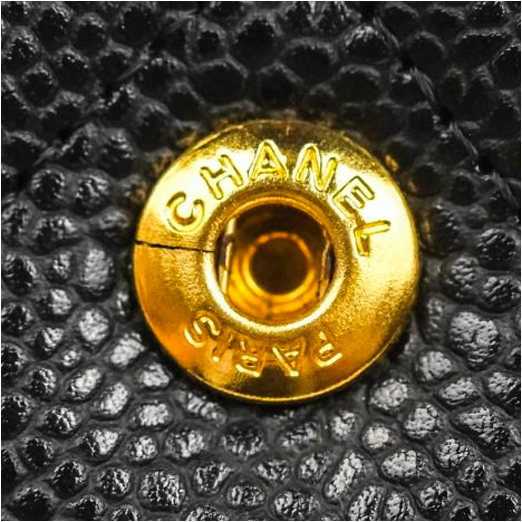
Seen from approximately the 9 series (around 2004) onward.
More modern Chanel bags often feature branded snap buttons engraved with: “CHANEL PARIS”. These buttons became increasingly common in later productions and remain widely used today.
Hardware Color Consistency
One important authentication point is color consistency.
The snap button should match the tone of the rest of the bag’s hardware: gold hardware should have a matching gold snap, silver hardware should feature a silver-toned snap, ruthenium or aged finishes should remain consistent throughout.
Significant differences in tone may indicate: a replaced button, repaired hardware or, in some cases, authenticity concerns.
That said, natural aging and oxidation can slightly alter the appearance of vintage hardware over time.
Signs of Age and Replacement
It is completely normal for vintage Chanel buttons to show wear.
Many bags have also undergone professional restoration during their lifetime. A replaced button is not uncommon, especially on heavily used vintage pieces.
When assessing authenticity, it is important to determine whether the button is consistent with the era, professionally replaced or entirely inconsistent with the bag’s construction and serial period.
Final Thoughts
Chanel buttons are a subtle but valuable authentication detail. Understanding which button styles correspond to different production eras can help collectors identify inconsistencies and better evaluate vintage bags.
Still, no single detail should ever be used in isolation. Authenticating a Chanel bag requires examining the piece as a whole. In many cases, authenticity is determined not by one perfect detail, but by the consistency of all details